A Rare Local You Might Meet
While most visitors come to Hawaii Volcanoes National Park for the lava and craters, there is a living treasure here too: the nene. This gentle Hawaiian goose is the state bird of Hawaii and one of the rarest geese on earth. Spotting one on the lava fields or near a crater overlook is a special moment. Here is what makes the nene so remarkable.
What Is the Nene?
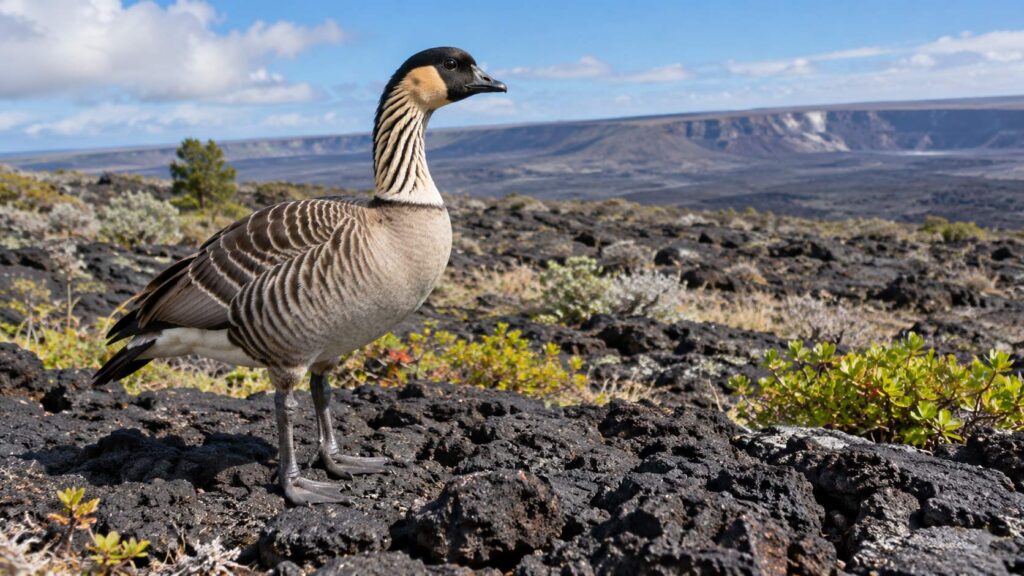
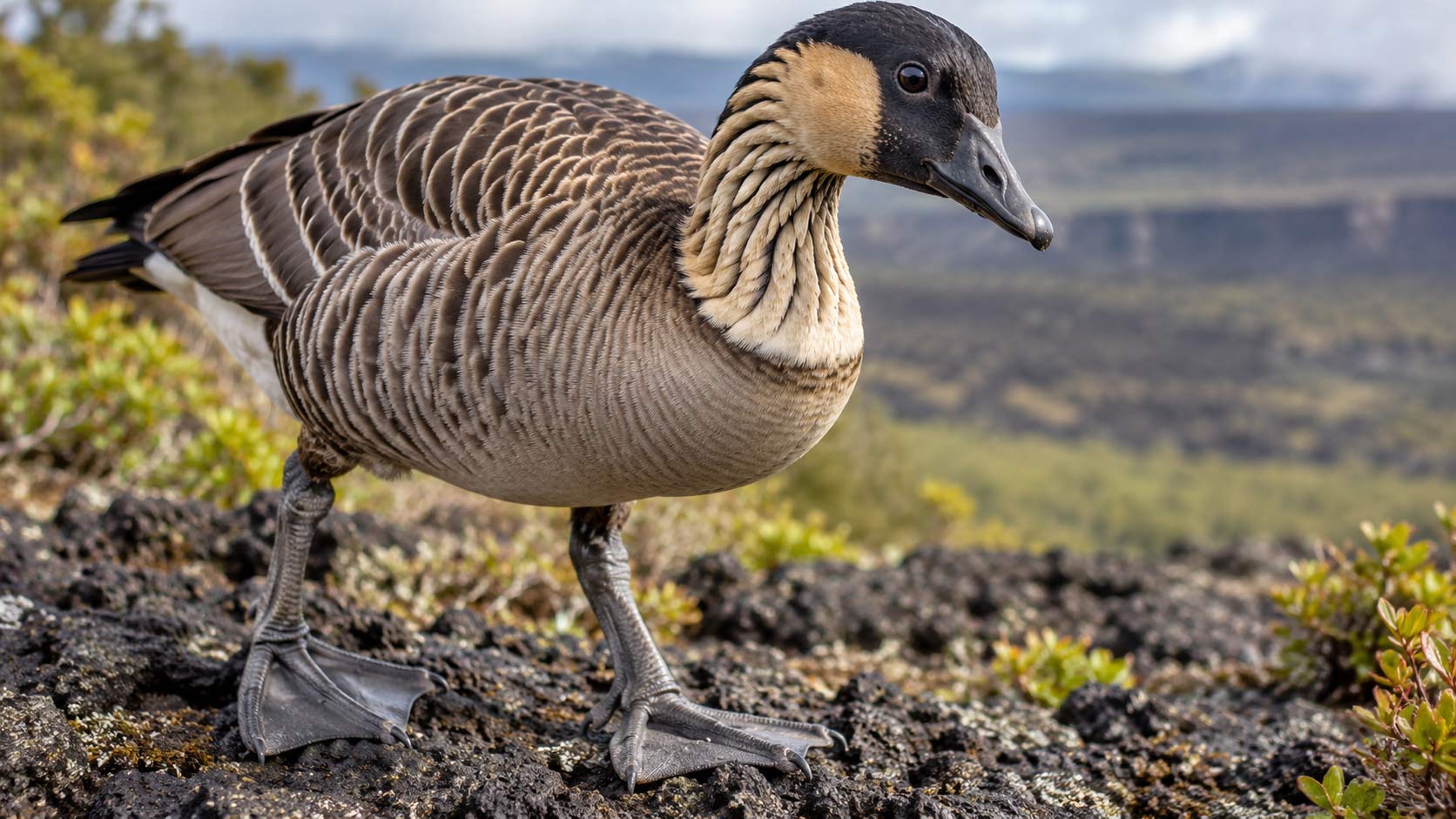
The nene (pronounced “nay-nay”) is a medium-sized goose found only in Hawaii. Scientists believe it descended from the Canada goose, with ancestors that reached the islands long ago and evolved into a unique species. Over time the nene adapted to life on rugged volcanic ground, developing less webbing on its feet to help it walk across rough lava. Its soft barred feathers, buff cheeks, and deeply furrowed neck make it easy to recognize.
Back From the Brink
The nene’s story is one of survival. By the middle of the 1900s, hunting, habitat loss, and introduced predators like mongooses and cats had pushed the bird to the edge, with only a few dozen left in the wild. Thanks to decades of captive breeding and reintroduction, much of it pioneered right here at Hawaii Volcanoes National Park, the nene has slowly recovered to several thousand birds. It remains protected and still needs our help.
Nene Quick Facts
- The nene is Hawaii’s state bird and found only in Hawaii.
- It has less webbing on its feet, suited to walking on lava.
- It nearly went extinct, dropping to about 50 birds in the 1940s.
- It is a protected species; keep your distance and never feed it.
How to Help Protect the Nene
If you are lucky enough to see a nene, enjoy it respectfully. Keep a good distance, about four car lengths, and never feed them, since human food harms them and draws them toward dangerous roads. Drive slowly and watch for nene crossing park roads, and keep your distance if one wanders near a parking area. These small acts help keep this comeback story going.
Watch for Them on Your Visit
The nene is a living symbol of Hawaii’s fragile and beautiful native wildlife, and the volcano is one of the best places to see it. Keep your eyes open on the lava fields and near the overlooks. On a guided tour, your guide can help you spot the nene and share the story of its amazing recovery. Ask us about visiting the park with respect for its land and its creatures.