
Two Kinds of Lava, Two Hawaiian Words
Walk across the lava landscapes of Hawaii Volcanoes National Park and you will notice the ground looks very different from place to place. In some spots it is smooth and ropy; in others it is a jagged, ankle-twisting jumble. Those are the two main types of Hawaiian lava, and the words we use for them, pahoehoe and a’a, are Hawaiian and are now used by scientists all over the world.
Pahoehoe: Smooth and Ropy
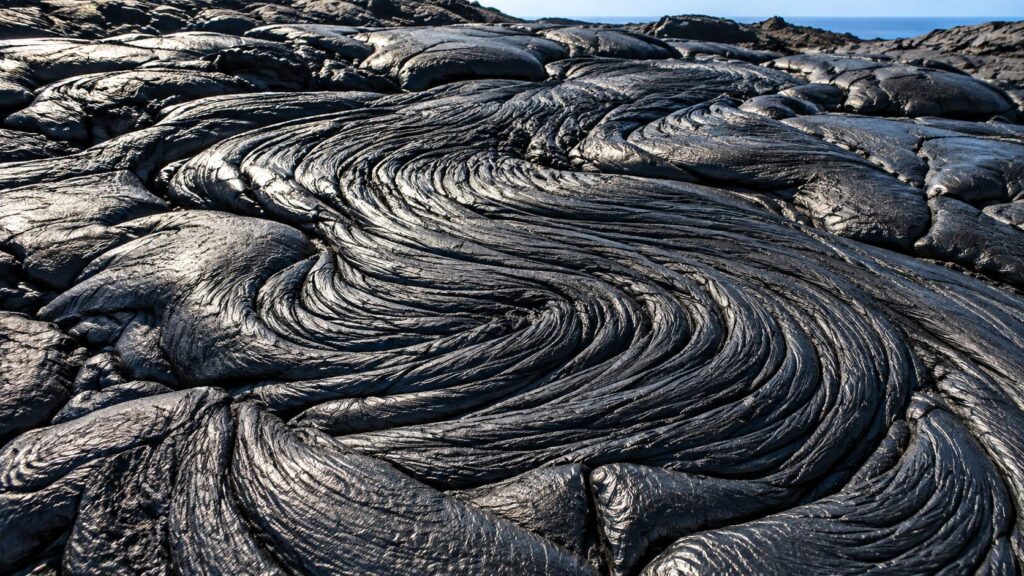
Pahoehoe, which means “smooth, unbroken lava,” has a glassy, billowy, rope-like surface. It forms when lava flows slowly and gently, letting a smooth skin form and fold over on itself into those beautiful coils. Cooled pahoehoe can be almost as easy to walk across as a sidewalk, and it is the most common form of lava on the islands.
A’a: Rough and Jagged
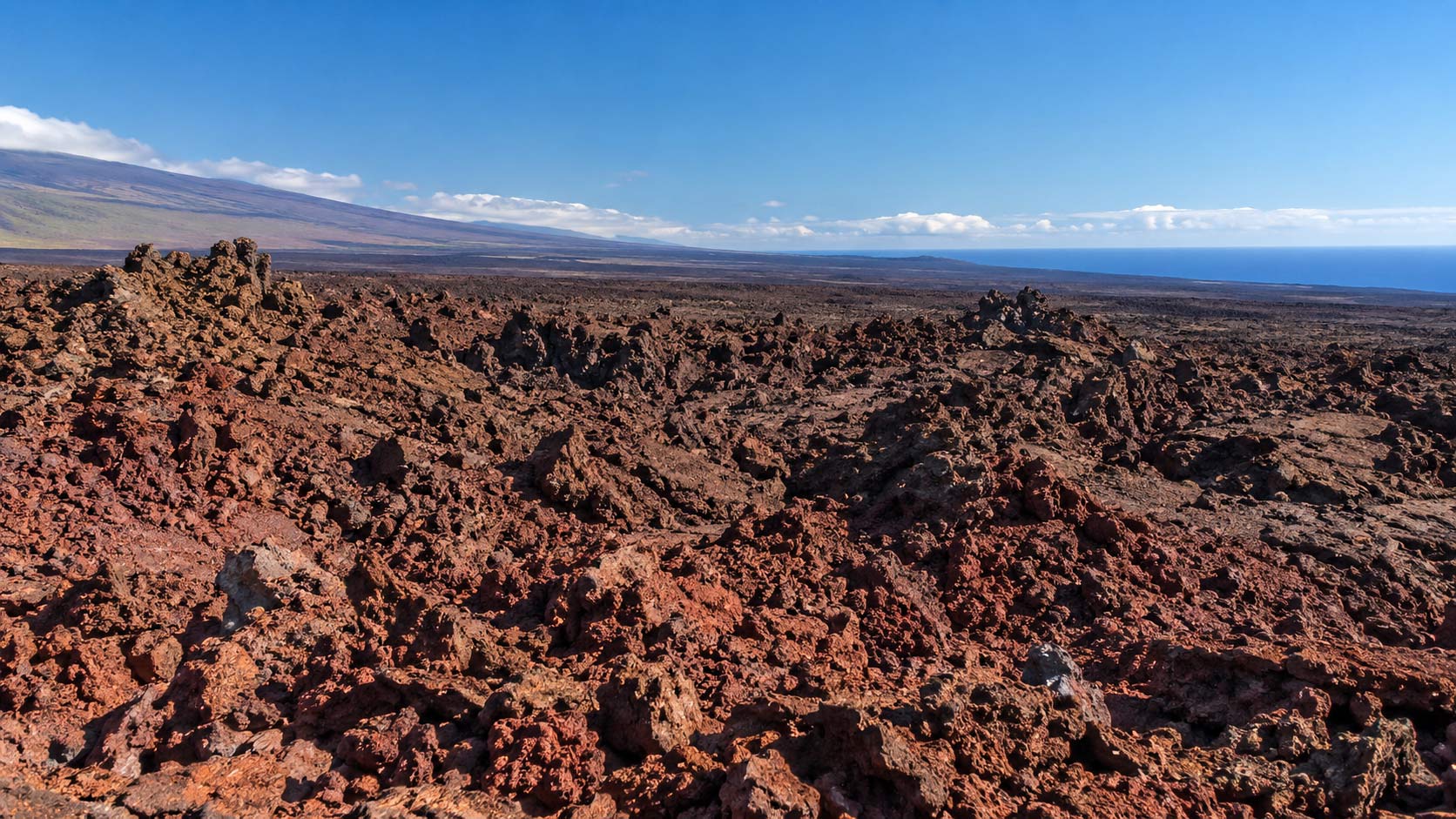
A’a (say “ah-ah”) is the rough, spiny, clinkery lava that forms when the flow moves faster and more violently. As it advances, the crust breaks into sharp rubble, leaving a surface like a field of broken glass and rock. Walking across a’a is slow and treacherous, which some say is why you shout “ah! ah!” as you cross it. A’a flows are usually thicker than pahoehoe.
Pahoehoe vs A’a at a Glance
- Pahoehoe: smooth, ropy surface; slow, gentle flow; easy to walk on.
- A’a: rough, jagged, clinkery surface; faster flow; hard to cross.
- Both are the same basalt lava, just cooled under different conditions.
- Pahoehoe can turn into a’a downstream, but never the other way around.
Same Lava, Different Journey
Here is the fascinating part: pahoehoe and a’a are made of the exact same lava. What makes them different is how fast the lava was moving and how it cooled. A single flow can even start as smooth pahoehoe near the vent and turn into rough a’a farther downhill as it speeds up and its surface tears apart. It never goes back the other way, which is a handy clue to how a flow behaved.
See It on a Volcano Tour
Once you know the difference, you will spot both kinds of lava all over the park and along the coast, and each tells a story about the eruption that made it. Treat these landscapes with care and respect for Pele, stay on marked trails, and let a guide point out the features you might otherwise walk right past. Ask us about our Big Island volcano tours.