
Who Is Pele?
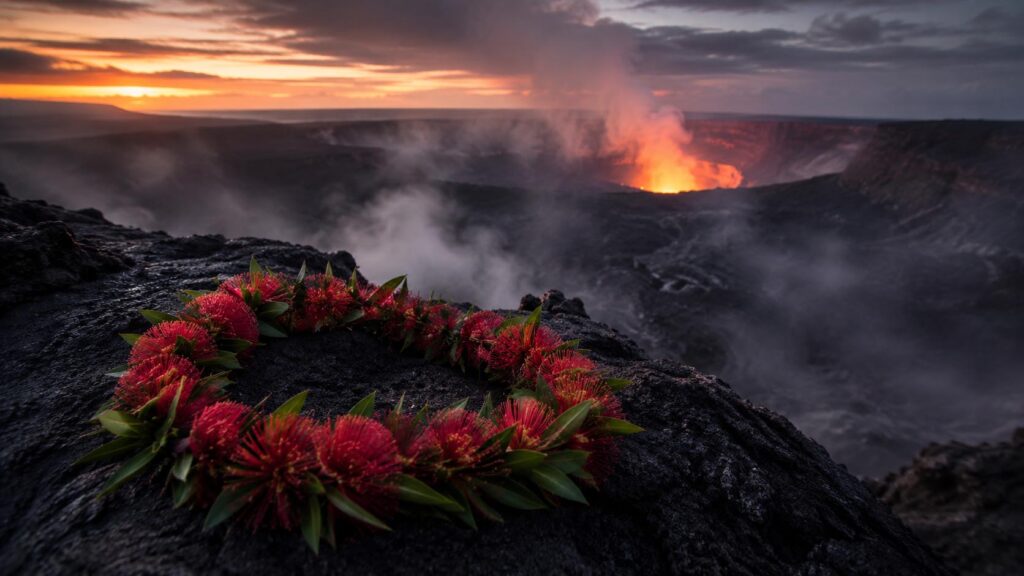
Long before scientists explained how the Hawaiian Islands rose from the sea, Native Hawaiians told the story of Pele, the goddess of fire, lightning, wind, and volcanoes. In Hawaiian tradition she is a powerful and passionate creator, the force behind every eruption and every new field of lava. To many families her stories, called moolelo, are not just old tales. They are a living part of the culture, passed down for generations and still honored today. When you stand at the edge of a crater in Hawaii Volcanoes National Park, you are standing in the place Hawaiians know as her home.
Her Home at the Summit of Kilauea
Pele is said to live at Halemaumau, the great crater at the summit of Kilauea. When the crater glows and lava rises, tradition holds that Pele is present and active. This is why the summit is treated as a sacred place, not just a scenic one. Visitors often see offerings left respectfully near the overlooks, and Hawaiian cultural practitioners still come to chant and honor her. Understanding this adds a deeper meaning to the view, turning a natural wonder into a place with a long human story.
The Journey Down the Island Chain
One of the most beautiful parts of Pele’s story explains something science later confirmed. The moolelo tell of Pele searching for a home, digging fire pits from the older islands in the northwest down to the Big Island in the southeast, chased by her sister of the sea. She finally settled at Kilauea, the youngest and most active volcano. Remarkably, this matches the real order of the islands, which grew one by one as the Pacific plate drifted over a volcanic hotspot. The old story and the modern science tell the same tale in two languages.
Ohia, Lehua, and Respect for the Land
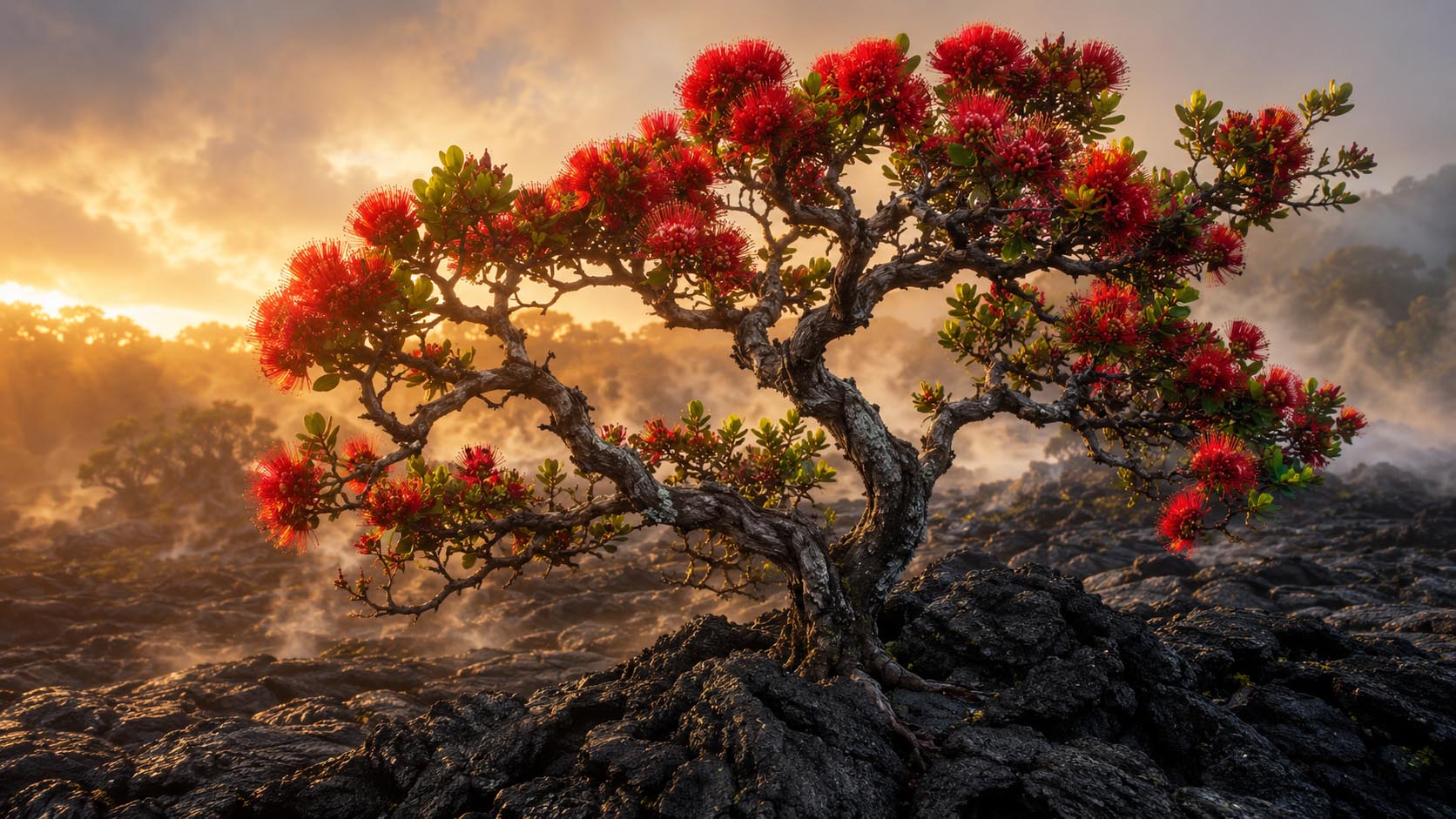
Another well-loved legend surrounds the ohia lehua tree, whose bright red blossoms are often the first plants to grow on fresh lava. As the story goes, Ohia and Lehua were two lovers, and when they were separated, the gods turned Ohia into a tree and Lehua into its flower so they would never be apart. Hawaiians say that picking a lehua blossom brings rain, like tears of separation. Stories like this carry a gentle lesson that runs through the whole park: treat the land, the plants, and the lava with care and respect.
The Custom of Leaving the Lava Where It Lies
You may hear about “Pele’s curse,” the belief that taking lava rock or sand from Hawaii brings bad luck until it is returned. Whether or not you believe in the curse, the message behind it is one every visitor can honor. The lava, the rocks, and the ohia are part of a living, sacred landscape. Leaving them exactly where you found them keeps the park whole for the next person and shows respect for the culture that has cared for this place for centuries.
Hearing Pele’s Story for Yourself
Knowing the legend of Pele changes the way you see Hawaii Volcanoes National Park. The glow in the crater, the black lava fields, and the red lehua blossoms all become part of one connected story of creation and respect. On our guided tours, we share these moolelo alongside the geology, so you leave with both the science and the spirit of the place. Come with an open heart, tread lightly, and let Pele’s story make your visit unforgettable.